Här är en uppdelning:
Key Concepts:
* Period (T): The time it takes for one complete cycle of the repeating event.
* Frekvens (F): The number of cycles per unit time.
Relationship:
Frequency and period are inversely proportional:
* f =1/T
* T =1/f
Units:
* Frequency is usually measured in Hertz (Hz) , where 1 Hz represents one cycle per second.
* Period is measured in seconds (s) .
Exempel:
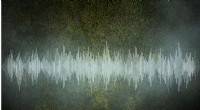
* ljudvågor: The frequency of sound waves determines the pitch we hear. High-frequency sounds are high-pitched, while low-frequency sounds are low-pitched.
* Ljusvågor: The frequency of light waves determines the color we see. High-frequency light is violet, while low-frequency light is red.
* Oscillations: A pendulum swinging back and forth has a certain frequency, determined by its length.
* Alternating current (AC): The frequency of AC electricity determines how often the current changes direction.
Applikationer:
Frequency is a fundamental concept in many areas of physics, including:
* Waves: Sound, light, water waves, etc.
* Oscillations: Springs, pendulums, etc.
* Electromagnetism: AC circuits, radio waves, etc.
* Quantum mechanics: The energy of photons and other particles is related to their frequency.
In Summary:
Frequency is a measure of how often something repeats. It's a crucial concept for understanding a wide range of physical phenomena.